
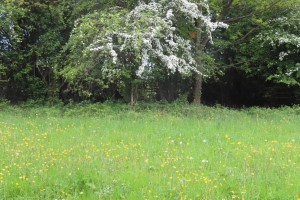
A review of 2021
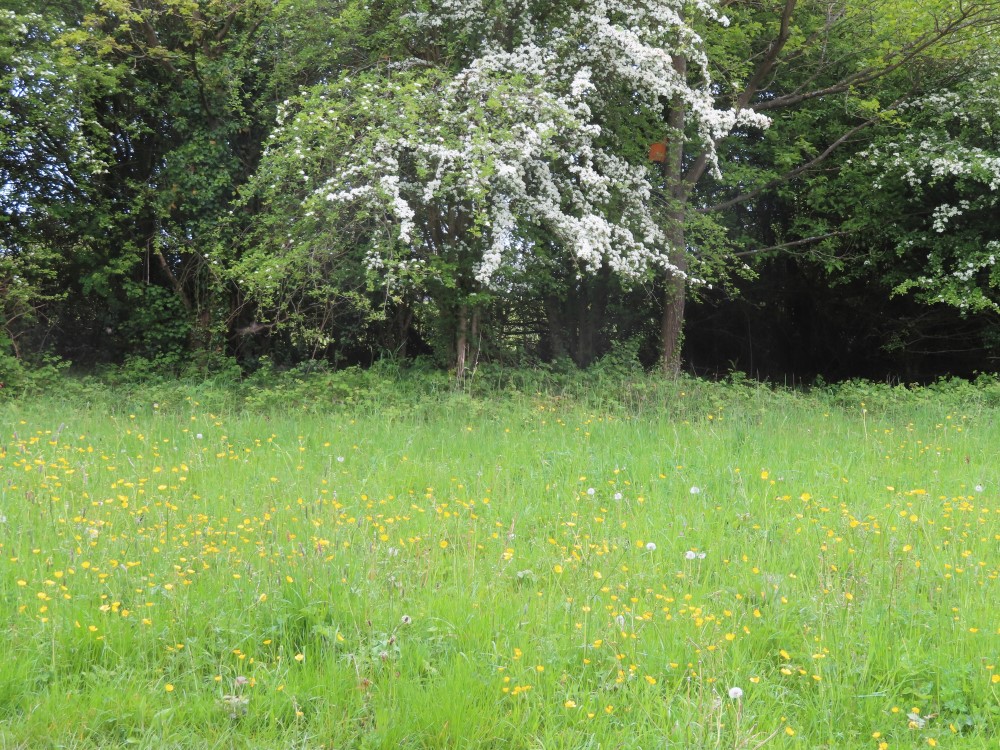
Lots happened at Swaines Green in what was a very strange year.
Firstly, the weather was unusual, to put it mildly. Snow in February, April was the driest month ever recorded in Epping, and cold too; May by contrast was very wet indeed, and most of the remainder of the year was wetter than average. There were no big heatwaves, but most months were warmer than average.
The cold, dry weather at the start of the spring disrupted nature significantly.
Butterflies were noticeably later and scarcer than usual, the tree caterpillar harvest was later and the tits, which depend on this to feed their chicks – each chick eats around 100 caterpillars a day! – suffered another poor breeding season.
Our nature was also affected by the severe sewage spill in February which polluted the pond and took until late summer to finally clear up. Not surprisingly we haven’t recorded many waterside plants or insects this year. It remains to be seen how quickly the pond environment recovers, but this spring there is already frogspawn in the pond.

Meanwhile, Middle and Lower Lincoln’s Fields were cut as usual in the Autumn, but for Lovelocks Meadow, as the previous September and October were so wet, the cutting could not be done on the allotted dates, and so it was cut twice in 2021: once in March, before the wild flowers got going, and again in late September. This may actually benefit the meadow, as continually cutting at one time of the year may actually favour certain species at the expense of others – this is apparently particularly true of some species of grass.
Birds
The monitoring of the nestboxes took place as usual last Spring, and the results were interesting.
There were 21 usable nestboxes this year, 20 of which were tit type boxes, and one suitable for a Jackdaw, Stock Dove or Little Owl – this one was however filled with twigs, possibly by a squirrel, and was unused.
Of the twenty, 14 were used by Blue Tits and five by Great Tits, all of which were successful, and the twentieth was abandoned at the part built stage, species not known. The Blue Tits collectively raised at least 84 young, and the Great Tits at least 19 – there were four nests where the young chicks were too well grown on inspection to risk counting them, or they might have left prematurely.
The average brood size for Blue Tit was 7.0, which is well down on the usual national average of 9.0, and for Great Tit it was 4.8, against the national average of 7.9.
So that resulted in 103 chicks ringed, meaning that in the past three years we’ve ringed a total of 298 tit chicks. Sadly we have yet to receive any report of a later record of these birds. That’s a little unfortunate – the average reporting rate is around 1% for small birds like these, so we are overdue some news of any of these!
With Covid restrictions affecting visits, a detailed breeding survey of the wider community of birds could not be completed. However, counts made suggested that the breeding season was widely a poor one, which is borne out by the British Trust for Ornithology’s national Breeding Birds Survey.

when opened for cleaning in October
The number of singing males counted was as follows (2019 figures in brackets – no survey made in 2020 due to the Covid lockdown).
Chiffchaff – 4 (7)
Blackcap – 5 (6)
Wren – 5 (14)
Blackbird – 6 (8)
Song Thrush – 3 (4)
Robin – 11 (12)
Dunnock – 1 (6) – but almost certainly under-recorded
Linnet – at least 6 pairs (5)
Greenfinch – 2 (2)
Goldfinch – 2 (1)
Also probably bred were Carrion Crow, Magpie, Woodpigeon, House Sparrow, possibly Jay and Long-tailed Tit.
Species not found this year that were present in 2019 include Whitethroat, Lesser Whitethroat, Garden Warbler and Bullfinch, plus Moorhen due to the pollution that affected our pond.
Plants
We were fortunate enough to have a plant survey conducted on two days during 2021, by two of the leading botanists in Essex: Ken Adams and Edith Barrie. The coverage of Swaines Green was fairly comprehensive, although the Pond area was still cordoned off following the pollution incident and so some of our water margin plants could not be assessed.
This survey gave us an update some twenty years after the most recent survey on the status of our flora.
They were able to find a number of species we hadn’t previously recorded, and although their visits were in mid-summer – meaning they couldn’t assess the early spring flowers, many of which were dormant again by summer – it was a really useful exercise.
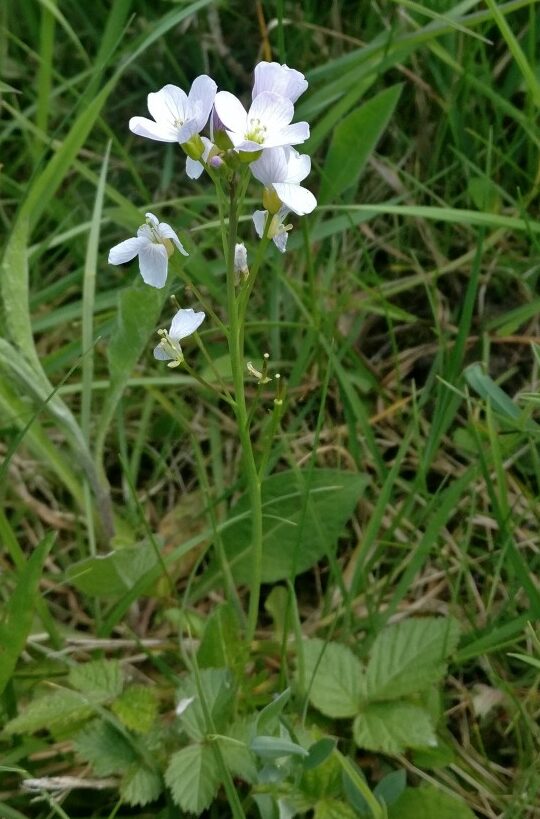
They were able to confirm the presence of Soft Shield Fern, an Essex red-listed species, along the banks of the stream in the lower part of Lovelocks and Lower Lincoln’s Field. Of the other red-listed species in our records, Lady’s Smock (also known as Cuckoo Flower) was confirmed in Middle Lincoln’s Field, but the Common Grape Hyacinth was not seen – this is one of those spring flowers that would be dormant again by the time of the survey period – and they could not find evidence of the Pepper Saxifrage, which must be considered unlikely to be present.
Invertebrates
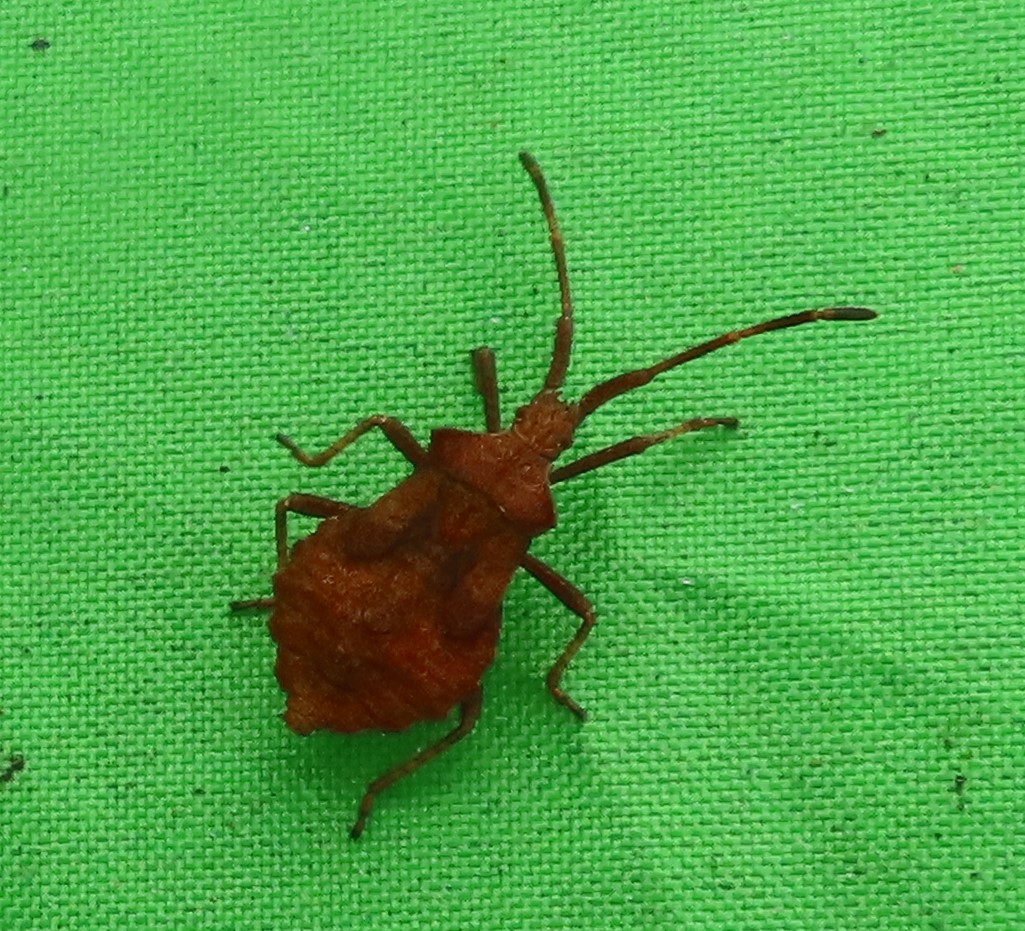
We had the good fortune to receive a visit from leading Essex specialist in Hemiptera (Bugs) and Ladybirds, Yvonne Couch, who did a sweep of the bushes and grassy areas of our meadows. She was able to add another nine species to our list. It was fascinating to see how the bugs were either knocked from branches into an upturned umbrella or were swept from the meadows with a net.
Butterflies were noticeably later in 2021, but we did find the first Marbled White for a while – a scarce species but one which seems to be getting more common in Essex.
We are still looking for appropriate experts to help record our other invertebrates, reptiles, bats, mosses and fungi. Any enthusiastic amateurs and citizen scientists out there? Please contact us! We hope to monitor more in 2022.