
How was 2023 at our favourite local nature site?
Weather review
Firstly, let’s take a look at the weather, as recorded by Epping Weather Station during the year.
The winter of 2022/23 had several days of severe wintry weather in December, with snow and frost, and some more very cold days in January. These were no doubt a challenge to our resident animals and birds, especially overwintering invertebrates. By contrast, February was very dry and quite warm.
On to the spring, and temperatures were mostly pretty average; however, March was very wet, and some days in May had torrential downpours and thunderstorms. This also provided some disruption to nesting birds.
Summer began with a hot, dry June, July was wet with some hot days, and August was remarkably average.
Autumn started with a September spell of a couple of weeks of record heat, after which it became pretty wet all the way through to the end of year. It remained largely milder than would normally be expected, apart from a brief cold spell in December, with freezing temperatures but no snow.
Conservation
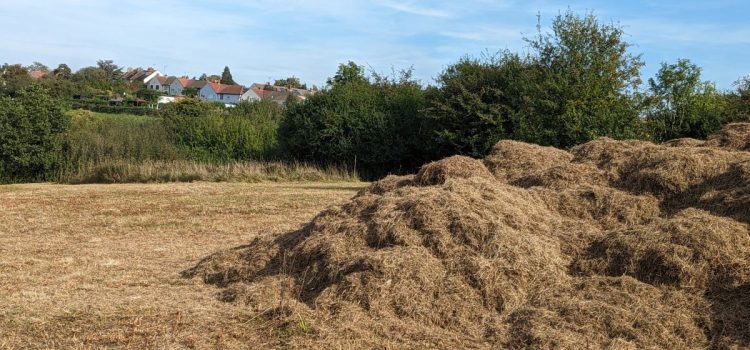
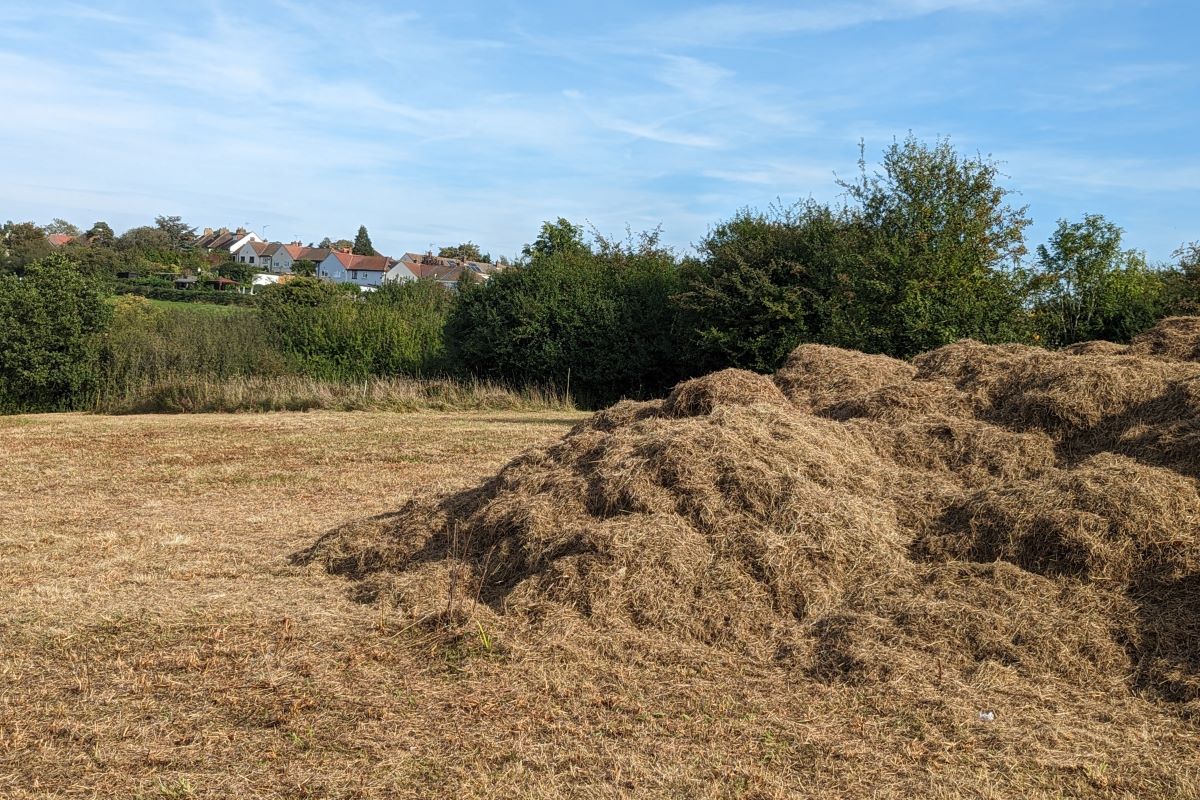
The focus for our conservation work this year has been on the reduction of encroaching scrub on our flower meadows. Some sessions in the upper area of Lovelocks Meadow cleared more ground for flowers to come back and for the mowers to reach when the meadow is cut. We also removed many of the saplings and some encroaching scrub in Lower Lincoln’s Field, and cut back the hazel bushes along the stream in Forties Field. Meanwhile once again the meadows were mown, the two Lincoln’s Fields in May and Lovelock’s in September. This is another measure to reduce scrub invasion and to encourage more wildflowers to grow by reducing the grass.
We also installed several more bird boxes, thanks to the learning disabilities team at ACE Activities who built several for us out of recycled wood. These increased our overall box numbers and helped replace some of the old and crumbling ones.
In addition, the bridges out of Forties Field wood onto Bolt Cellar Lane and into Middle Lincoln’s Field which had both been vandalised have been repaired, and assorted litter and NOX cannisters removed.
Nature report
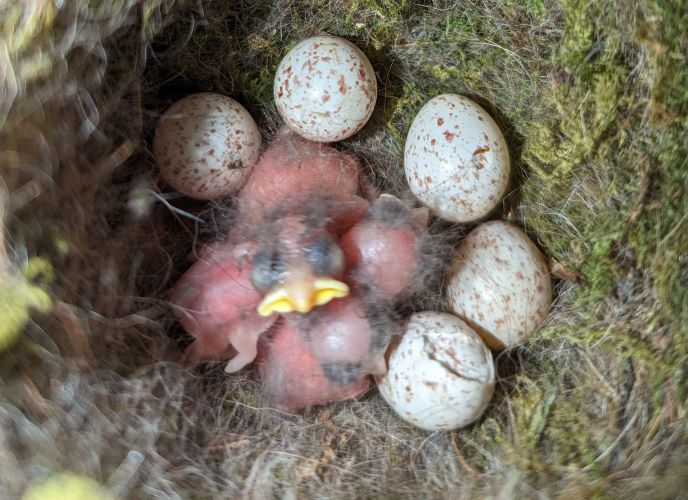
We installed several additional nestboxes this year, which were made for us by the ACE Activities project of VAEF, where adults with learning disabilities are supervised making wooden products from recycled timber. Most of these were occupied, and together with our existing boxes we supported 11 Great Tit nests, of which 9 were successful, and 14 Blue Tit nests, of which 11 were successful.
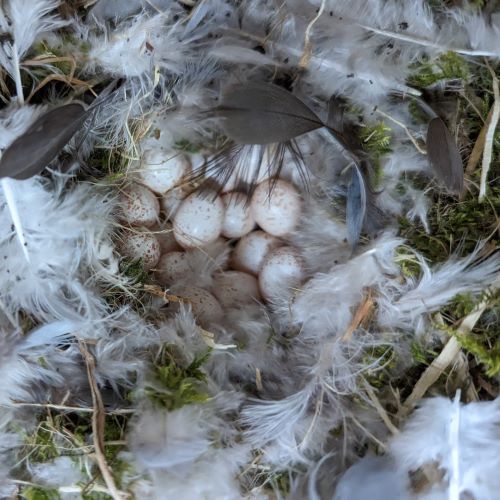
One Blue Tit nest had an incredible 16 eggs (probably the result of two females laying in the same box), of which we think 12 young fledged, and two other Blue Tit nests also raised 12 chicks each, whilst one Great Tit nest had a brood of 11. It seems generally to have been a productive season for the tits at Swaines Green, which hasn’t been the case everywhere in 2023. From these boxes, 56 Great Tit chicks and 65 Blue Tit chicks were ringed.
Sadly a nestbox designed to attract Little Owls put up in Middle Lincoln’s Field only succeeded in attracting a Grey Squirrel. That was cut short as the nestbox fell from the tree or was dislodged, and some kind vandal threw it in the pond. It has been rescued and renovated and will go back up over the winter in a different location.
Help is needed to clear and maintain the nestboxes over the winter and to monitor and record nests in spring. Anyone interested should get in touch.
A breeding survey of our other birds yielded the following results.
Territories held
Blackbird – 5 singing males (sm)
Song Thrush – 2 sm
Robin – 6 sm
Dunnock – 3 sm (likely under-recorded)
Wren – 10 sm
Blackcap – 8 sm
Whitethroat – 2 sm
Lesser Whitethroat – 1 sm
Chiffchaff – 4-6 sm
Goldfinch – 3-4 sm
Greenfinch – 2 sm
Also recorded and breeding confirmed or highly suspected
Woodpigeon – at least 2 nests
Linnet – 2-3 pairs plus another 2 along Bolt Cellar Lane
Carrion Crow – at least 2 nests
Magpie – at least 2 nests
Also recorded and may have bred:
Collared Dove
Jay – 1 pair
House Sparrow
Chaffinch
Potential breeders recorded in season but probably did not bred on site
Mallard
Moorhen
Buzzard
Red Kite
Kestrel
Ring-necked Parakeet
Green Woodpecker
Great Spotted Woodpecker
Stock Dove
Jackdaw
Starling
Garden Warbler
Not recorded having previously bred:
Song Thrush
Bullfinch
There were several other species recorded that would not be expected to breed, such as overflying gulls, Swallows, House Martins, Swifts, etc.
The wildflowers on site put on their usual fine display. One new flora species discovered on site in the past year is the Few-flowered Garlic, Allium paradoxum, a widely naturalised introduction. This is a spring flower and there is a clump in Forties Field beside the stream near the bridge onto Bolt Cellar Lane.
Some of this year’s flowers are shown below.
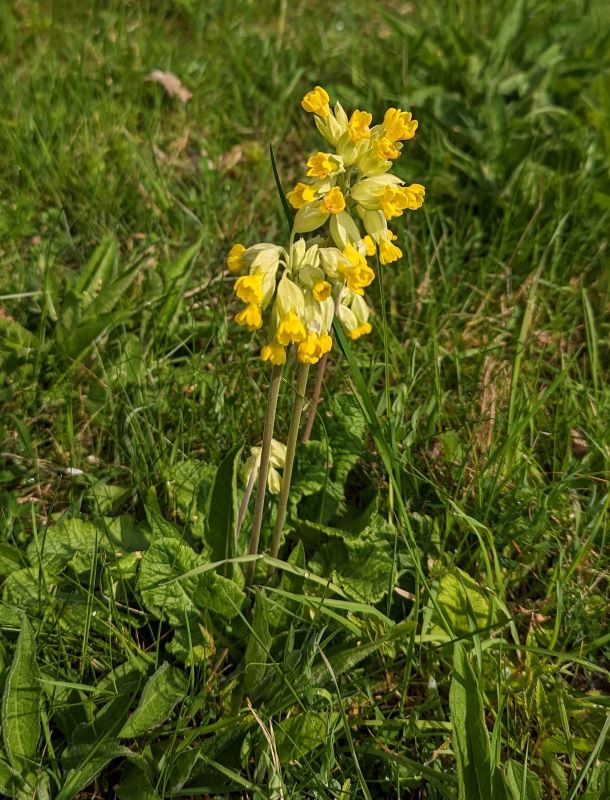
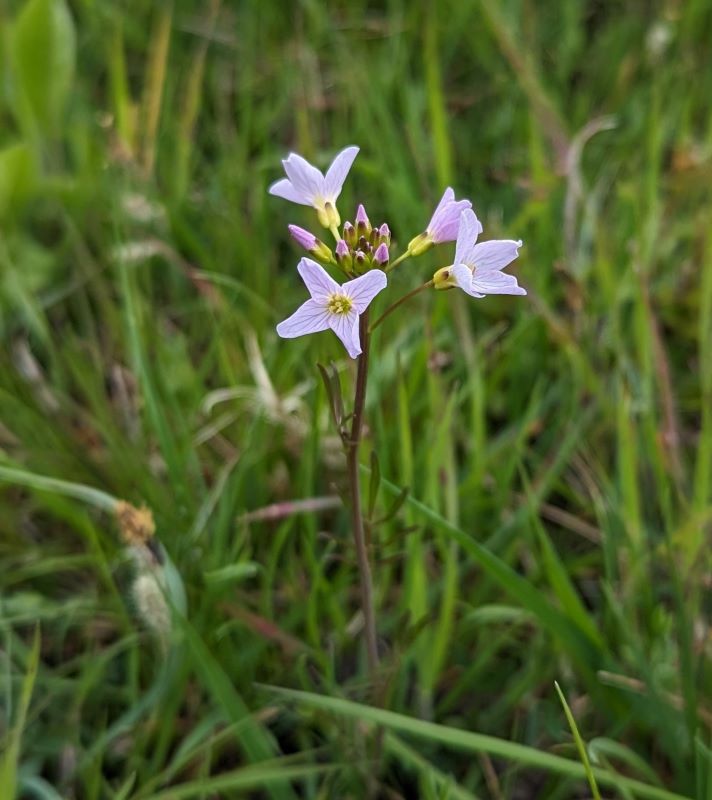
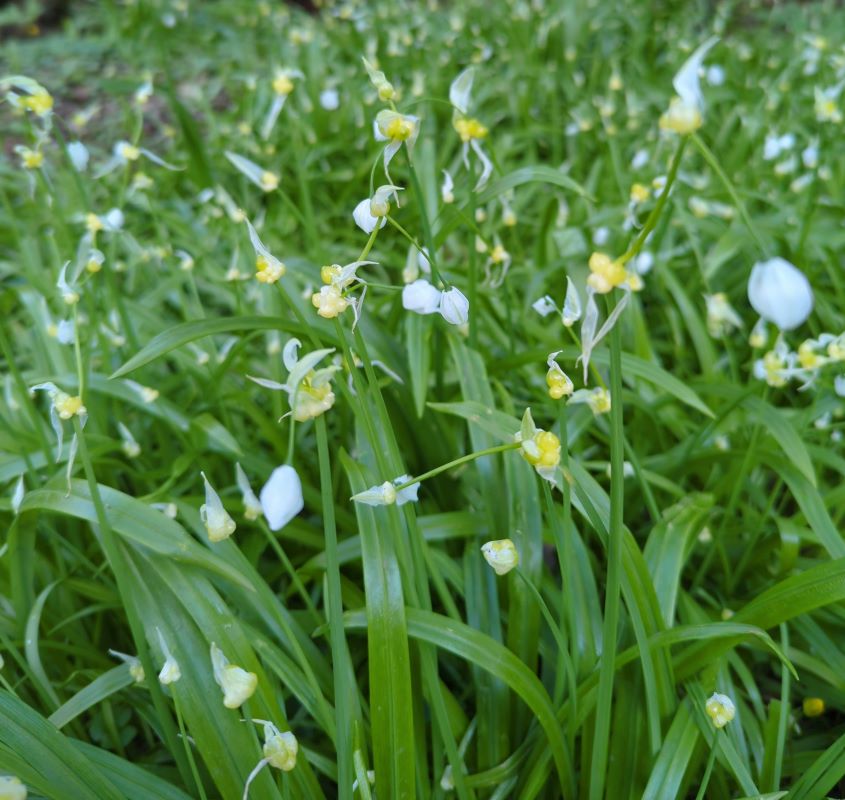
The meadow in Lovelocks was mown in the autumn, but those in Middle and Lower Lincoln’s Fields were mown in May. This is because a different strategy is being followed to maintain the meadows by the City of London Corporation, who own those fields, from that of Epping Town Council, who own Lovelocks. The CLC rationale is that this will help reduce some of the grasses and allow more of the wildflowers to flourish. The autumn mowing strategy is more appropriate for Lovelocks due to the amount of invading Blackthorn that grows up each year.
The butterflies this year seemed to get going later than in the past, but that is anecdotal rather than a survey result. Particularly noticeable have been the large numbers of Red Admirals, with flying adults keeping going well into October. Again, this has been a widely reported phenomenon this year.
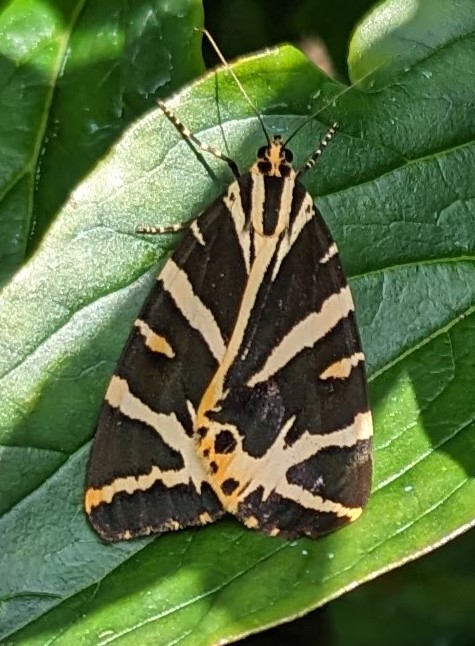
One new moth species recorded this year was the instantly recognisable Jersey Tiger. This is a quite large day flying moth with a striking black and white pattern at rest, and when in flight the vivid red underwings can be seen. Jersey Tigers are fast spreading across southern Britain from the near continent, probably as a result of global warming. Watch out for one next summer in our meadows!
We still need keen amateur naturalists who are familiar with invertebrates, mammals including bats, reptiles, mosses and fungi to help catalogue our resident species. So if you can help, or know of someone who can, please get in touch.