
An update on Swaines Green in winter 2020/21
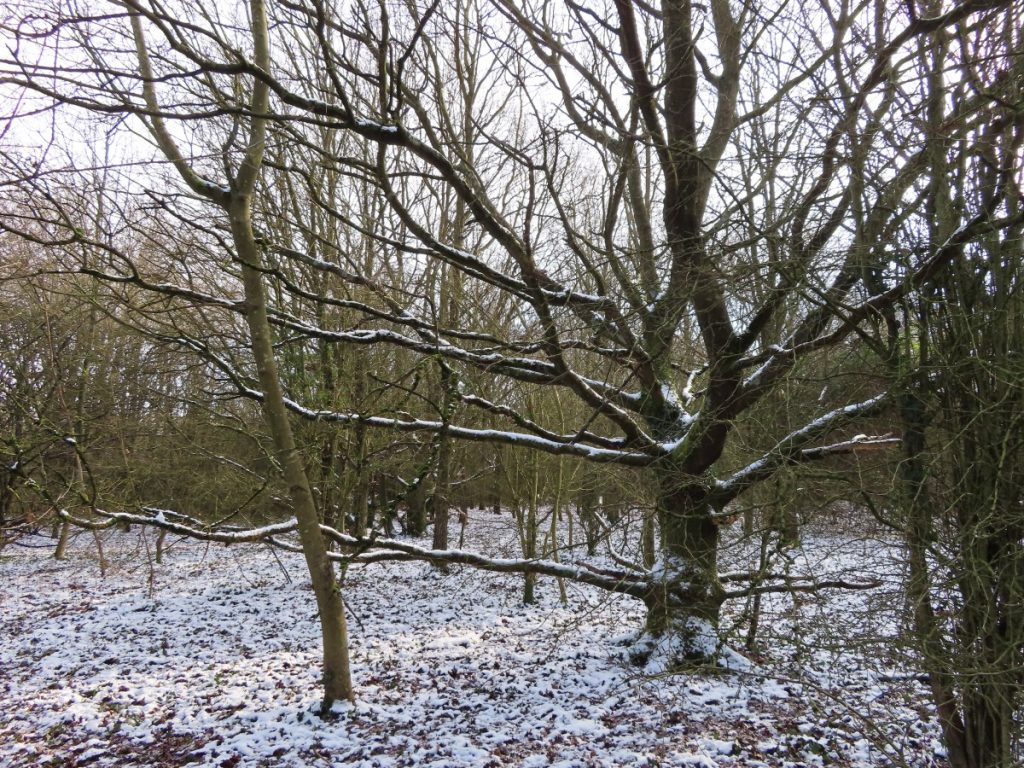
Swaines Green is often a pretty picture when we have snow, and the cold snap for a week this February was no exception.
It was also more accessible than for most of the winter to date, as a lot of very wet weather has left the paths extremely boggy, and not to be attempted without wellies and a good sense of balance. But when this froze, suddenly the paths were more walker friendly for a brief week!
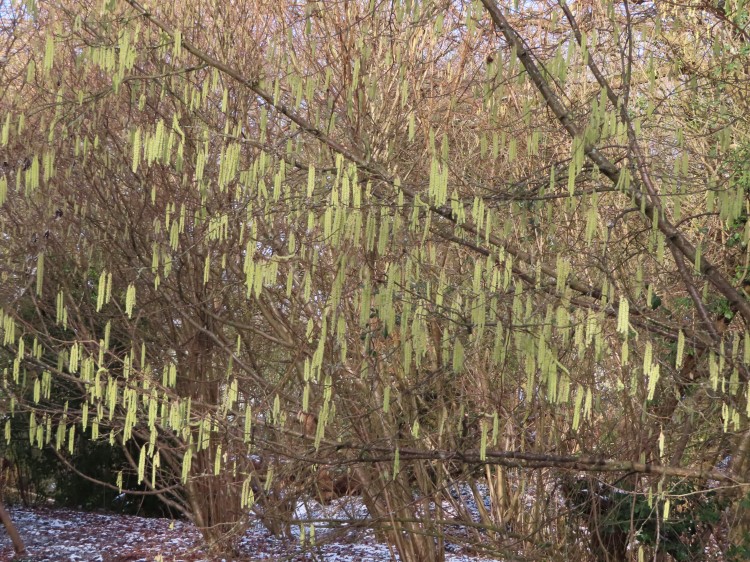
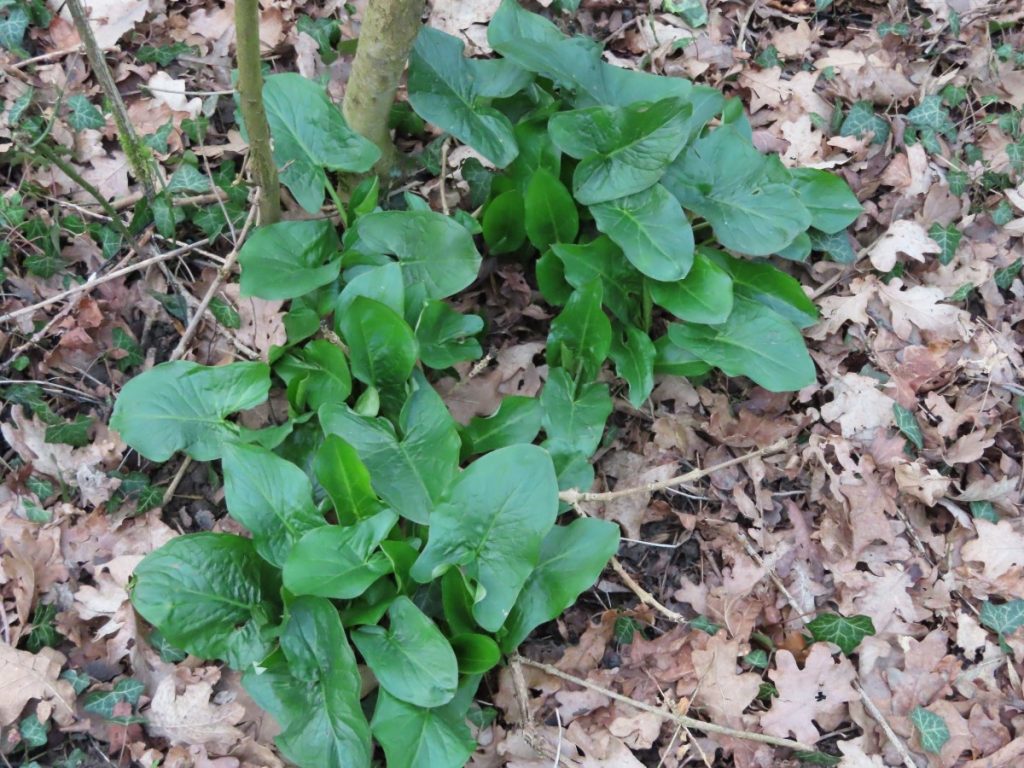
Despite the snow and frost, nature keeps up its preparations for Spring – the Hazel catkins are putting on a good display in Forties Field wood, and there are plenty of signs of buds swelling and shoots starting to emerge. One of the first to stir is the Cuckoo-pint, also called Lords and Ladies. It has distinctive arrowhead-shaped glossy leaves and clumps are appearing particularly amongst the trees in Forties Field. You’ll have to wait until April for the curious flowers, a bit like a funnel of chip paper in greenish white with a brown spike in the centre. The spike turns into red berries in late summer, but these are poisonous so should be avoided.
Conservation work this winter has had to be curtailed with the second Covid lockdown. Before Christmas we did however manage to get a few working parties on the ground, and much of the overgrown brambles and ash and oak saplings have been cleared from Middle and Lower Lincolns Fields to make paths more accessible and reduce encroachment on the flower-rich grassland. We also had to clear a fallen tree that temporarily blocked the entry into Forties Field from the lower corner of Lower Swaines Recreation Ground.
Lovelock’s Meadow is normally mown during September, but due to access difficulties that had to be postponed last year, and then it became too wet. The plan now is to mow the meadow in early March, before the spring growth becomes too advanced.

The task of nestbox maintenance – emptying old nests and making repairs – has also been completed, with a few surprises. The biggest was when one nestbox was opened and found to be full of acorns! After making enquiries, it seems that this is a typical hoarding action of the Wood Mouse. This particular mouse was obviously very diligent, as there were somewhere in excess of 200 acorns in the box. I’m sure that would be enough to see a mouse through the hard times!
Some of the boxes had suffered damage from squirrels, and had to have metal faceplates put around the holes. One box in particular had a large hole chewed in the front, and had to have major repairs! Squirrels are sadly rather fond of eating baby birds and will go to a lot of effort to get them. The same is true of woodpeckers, but this box had the distinctive ‘tearing’ damage of a squirrel, and as squirrels are also more common than woodpeckers in Swaines Green, I don’t think the jury would need to retire for long before making their verdict.
One new box also went up this winter. This is a larger box, suitable for Little Owl, Stock Dove or Jackdaw, but perhaps a bit small for a Tawny Owl. They can also sometimes be taken over by those pesky squirrels, but we’ll see what happens this summer!
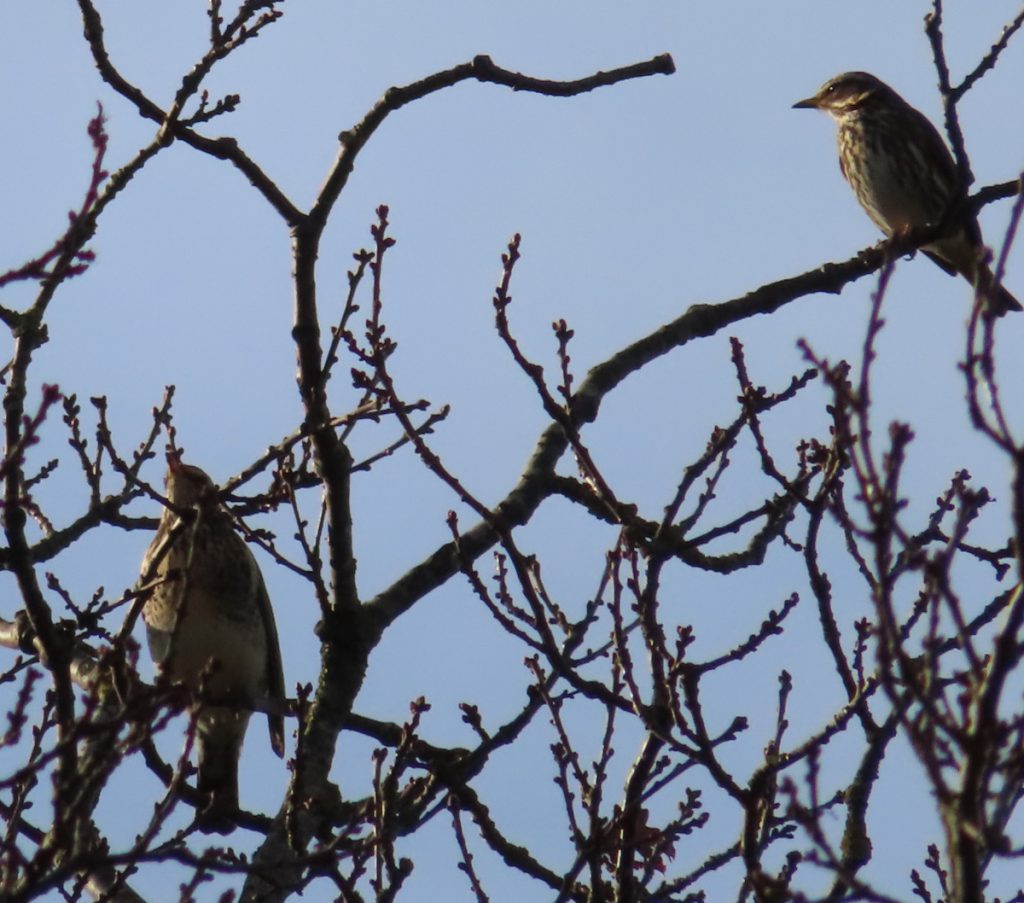
Following a good berry crop, the hedgerows were well populated by winter thrushes up to the turn of the year, with fewer after the berries largely ran out. During the cold snap however, numbers were swelled by birds leaving the frozen Continent and heading west, and there were some flocks of mainly Blackbird and Redwing feeding in the leaf litter under the trees of Forties Field. As February advances, there are still one or two around, but these will soon go.
Good numbers of Linnets also seemed to survive in the scrubby areas of particularly Lovelocks Meadow. Birds that tend to be hardest hit by frozen conditions are the smallest, such as Wren and Long-tailed Tit. There are still some around, but we’ll see better in spring if numbers are reduced. Populations of these birds can however quickly rebound with a single good breeding season.
Finally, it was good to hear the other day three singing Greenfinches – these birds have suffered greatly in the past few years from a deadly disease, Trichomonosis, which affects many species of bird but seems to have hit Greenfinches particularly hard – in the past twelve years, Britain has lost more than half its Greenfinches. It’s good that they seem to be well established at Swaines Green.