
Time for more nature news as summer fades fast and autumn takes over at Swaines Green
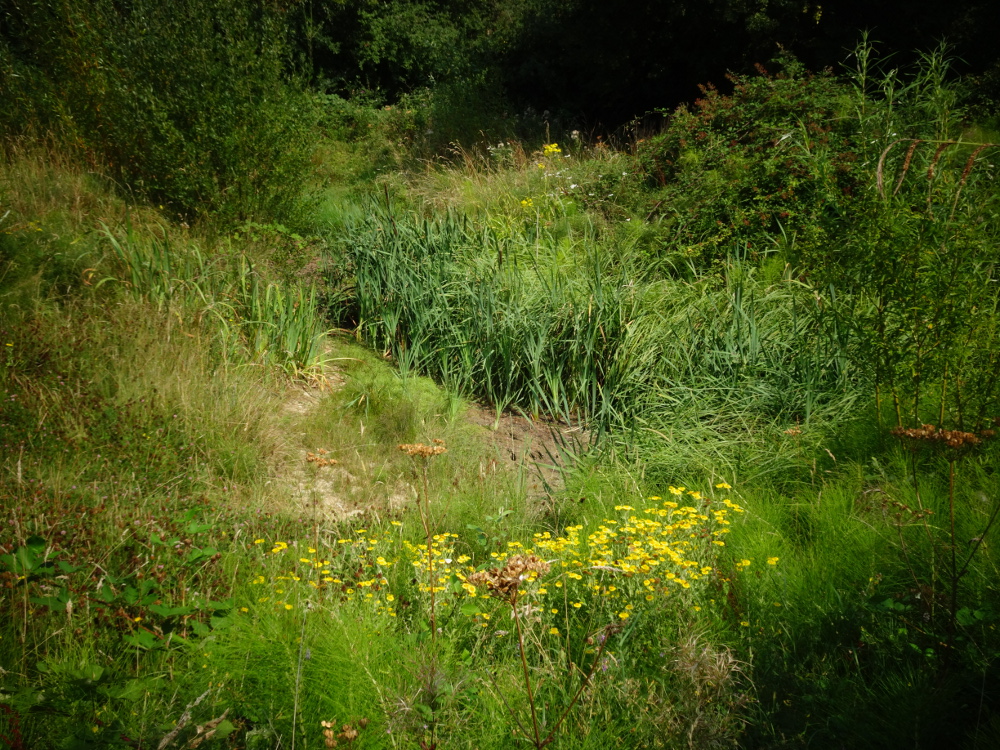
On 13th August the pond was completely dry… 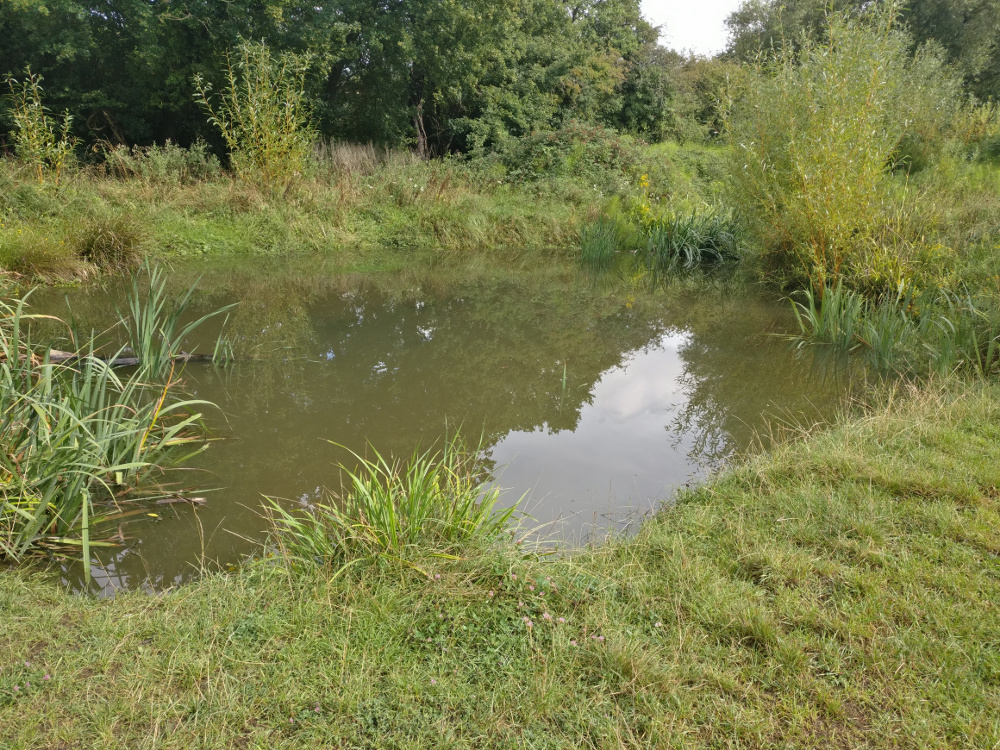
…by 17th August, it was full to overflowing
There’s certainly been some extreme weather during August! Dry and very hot indeed up to mid month, which resulted in the pond and the streams becoming completely dry, and then several days of deluges which caused streams to overflow and the pond to fill to overflowing. We are now looking anxiously at the pond to see if its ecological balance has been disturbed, as it became black and smelly: this implies a lack of oxygen due to excessive decomposing materials swept in during the rains. We don’t think there is lasting damage, it begins to look as though it is recovering.
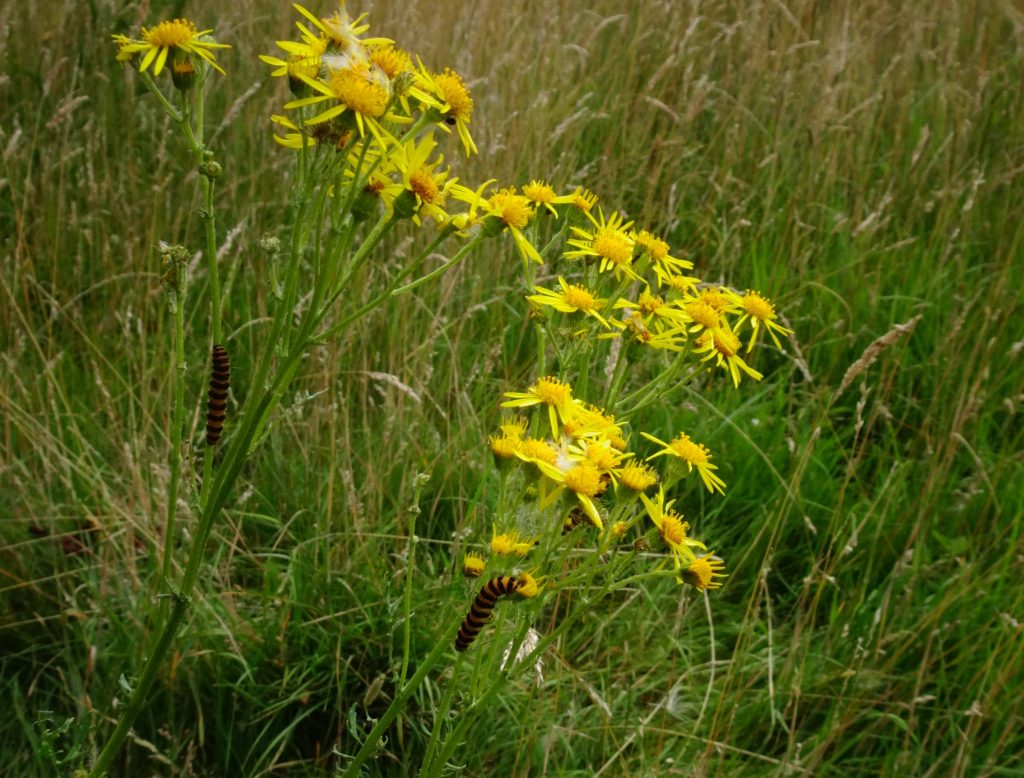
Now as autumn creeps upon us, Middle and Lower Lincoln’s Fields have been mown, and Lovelock’s Meadow will get mown soon. There aren’t many wildflowers still blooming at this time of year, but Lovelocks still has some Ragwort, Fleabane and Yarrow in flower. Some of the Ragworts could earlier be found with the striped orange and black caterpillars of the Cinnabar Moth, but these are all now tucked up in cocoons underground for the winter.
Most of our summer butterflies are also no longer flying; just a few Large Whites can still be found, with the occasional Common Blue and Speckled Wood. Some butterflies will hibernate as an adult, notably Peacock and Small Tortoiseshell; many hibernate as a chrysalis, such as the Whites, Red Admiral, Holly Blue and Speckled Wood; some as a caterpillar, including Common Blue, Meadow Brown, Gatekeeper, Large Skipper, and some Speckled Woods; and others pass the winter as eggs, such as Essex Skipper, and some Red Admirals.
Despite the travails of the pond, some dragonflies are still hunting the area. There have been sightings of both Emperor Dragonfly, one of our largest dragonflies with a vivid blue (male) or green (female) body, and of the more delicate, bright red and slender Large Red Damselfly.
Most of our summer visitors amongst the birds have now departed, but it is still possible to hear the questioning “Hooweet?” of the Chiffchaff, and the quiet repeated “check, check” of Blackcaps deep in cover. One of the distinctive sounds of autumn is the ticking of Robins, as they move about and look for winter feeding territories. Some of our Robins move further south in winter, and some from further north move here. Around Lovelock’s Meadow in particular there are now small flocks of Linnets constantly on the move, their flight call a monotone twitter. And at dusk, lines of gulls can be seen moving south overhead, particularly Black-headed and Lesser Black-backed Gulls, but increasingly Herring and Common Gulls too. These are heading down to the Walthamstow reservoirs for somewhere safe to roost; they disperse back to the fields where they are feeding again at first light.
Earlier this year, every one of our 22 nestboxes had been occupied, and it looks as though they have all been successful. The Coronavirus lockdown meant that we were unable to check them until late in the season, but four were occupied by Great Tits, sixteen by Blue Tits, and two boxes had fledged before they could be checked. As a result, 19 Great Tit chicks were ringed, 92 Blue Tit chicks, and there were at least six more Great Tits and 20 more Blue Tits too big to ring. The overall productivity per nest was therefore 8.3 for Great Tit, and 8.0 for Blue Tit, compared with a disappointing 6.3 and 6.4 respectively last year. Certainly there are plenty of parties of tits moving about the hedgerows and treetops at Swaines Green this autumn.
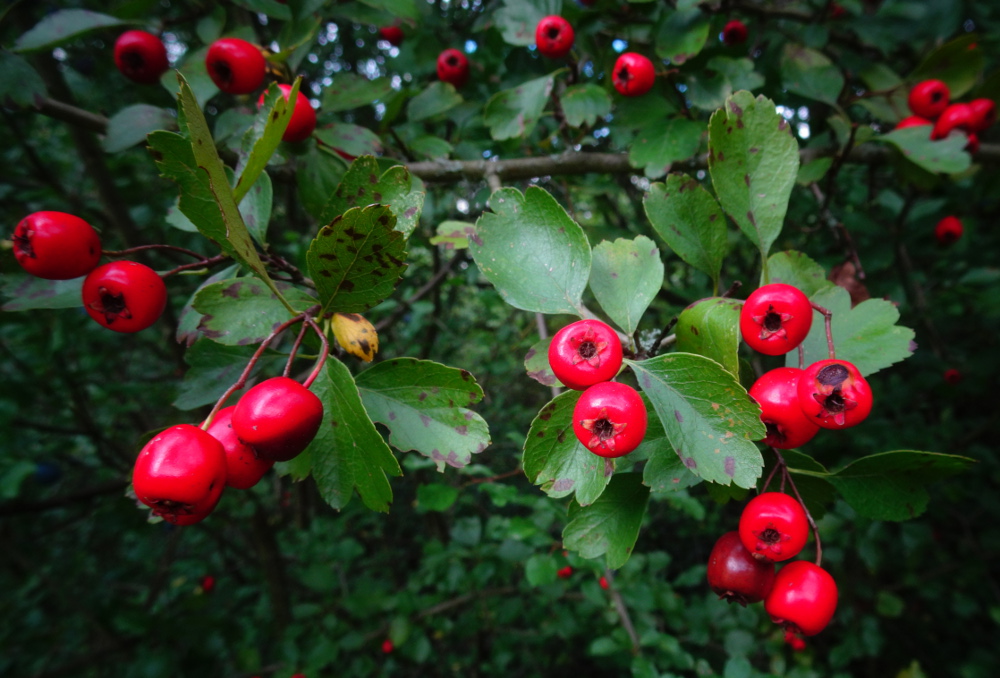
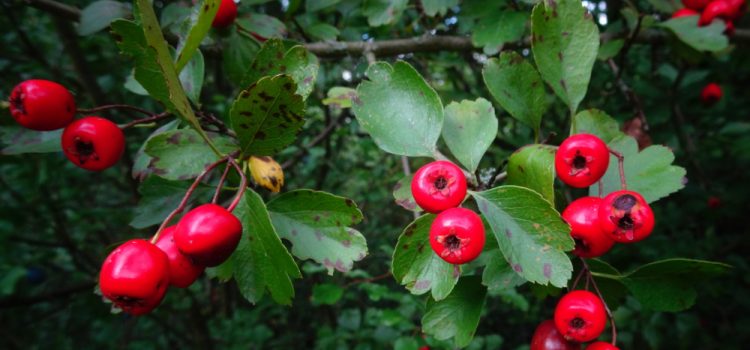
On the subject of hedgerows, they are loaded with plenty of hips, haws and sloes, making a fine sight in September sunshine. In amongst the rows of hawthorn bushes, an interesting discovery has been made: one of the hawthorns at the top of Lower Lincolns Field, near the Coronation Hill entrance, is not a Common Hawthorn at all, but a Midland Hawthorn, Crataegus laevigata, also known as the Hagthorn. This is a much less common cousin of the Hawthorn, and is not easily distinguished: it has leaves that are often barely lobed at all, and slightly larger fruits, but is more reliably identified by having two seeds in each berry instead of one. Nice to add that to the Swaines Green list!