
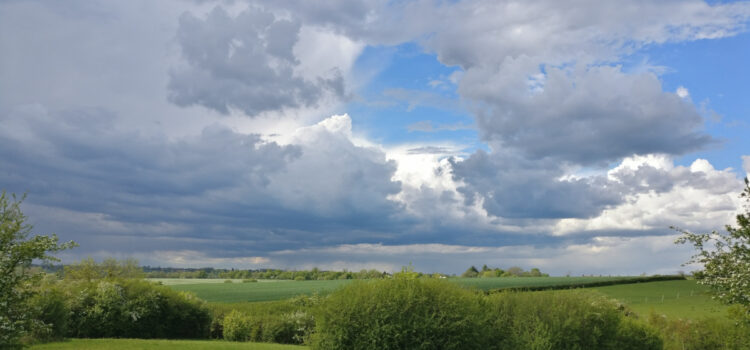
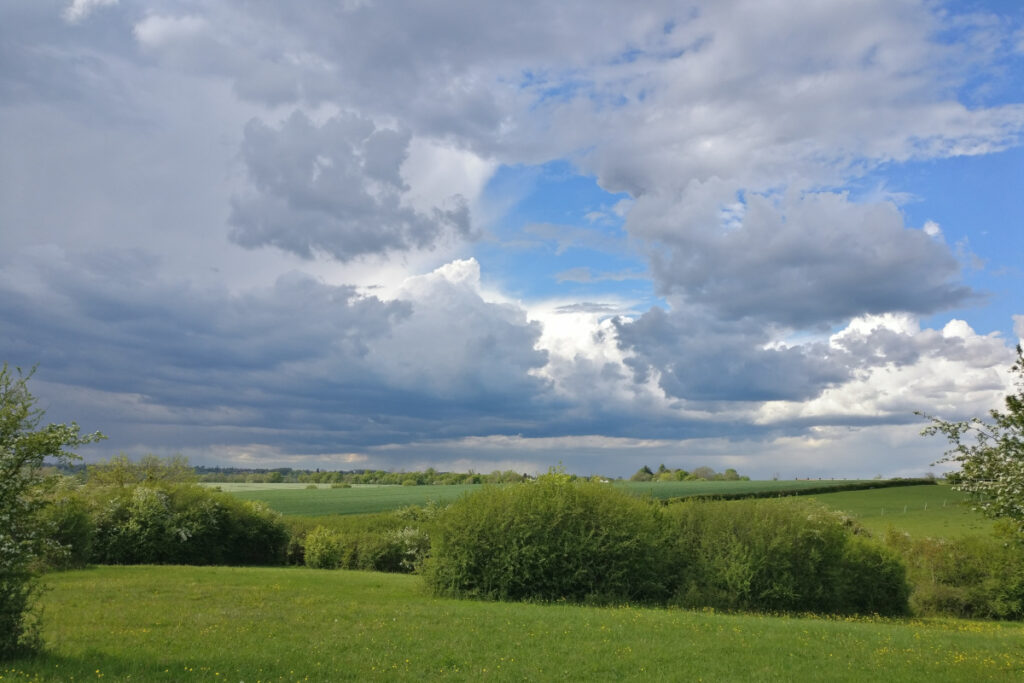
It’s been a pretty strange year so far. The weather has lurched from saturated, via a brief arctic snap, a very short burst of warmth, to a chilly and very dry April, and now a chilly and very wet May. And to add to the mix we had the bad pollution incident severely damaging our pond.
Starting with the last first, at least the pond has now been pumped out again and refilled, and is hopefully a clean habitat again. It is not yet clear whether the City of London Corporation will be making any wildlife reintroductions, but we will watch with interest what wildlife reintroduces itself. At least the first visit by a pair of Mallards has been seen.
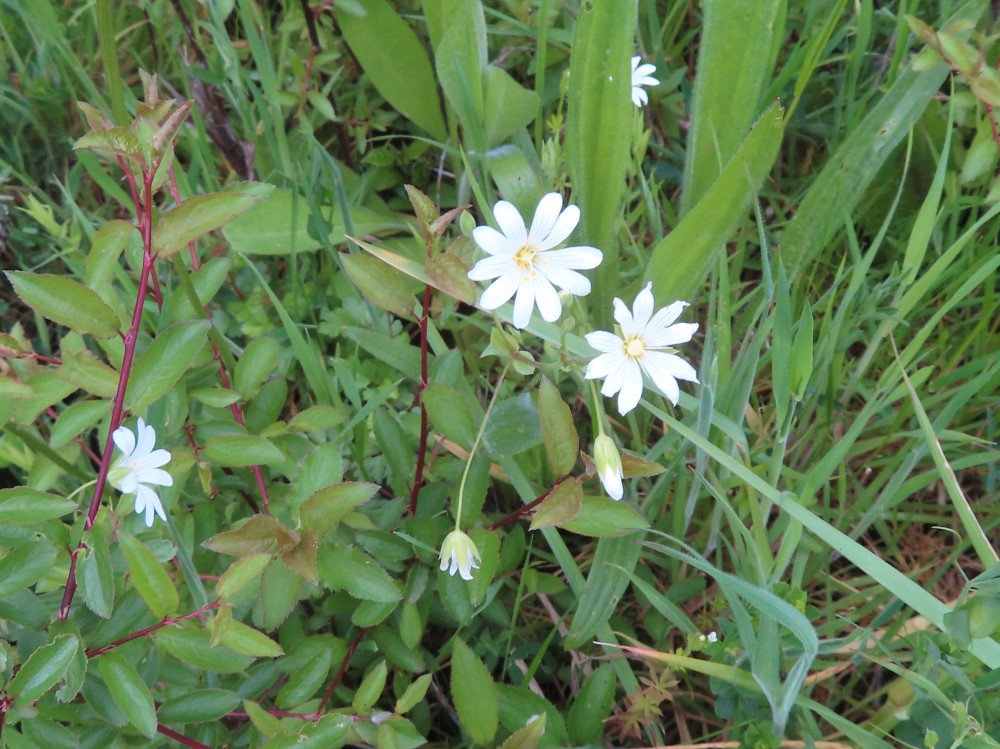
The unseasonably cool weather has clearly delayed the normal Spring growth. Trees are a bit later into leaf – even at mid May the oak trees are not yet in full leaf – and some plants have been late into flower this year, notably the Stitchwort’s small white star-like flowers which are only now beginning to show well. The Cowslips are slowly spreading in Middle Lincolns Field, but the flowers are now fading. The Cow Parsley is now beginning to flower along with the Hawthorn, and the Buttercups are in full swing.
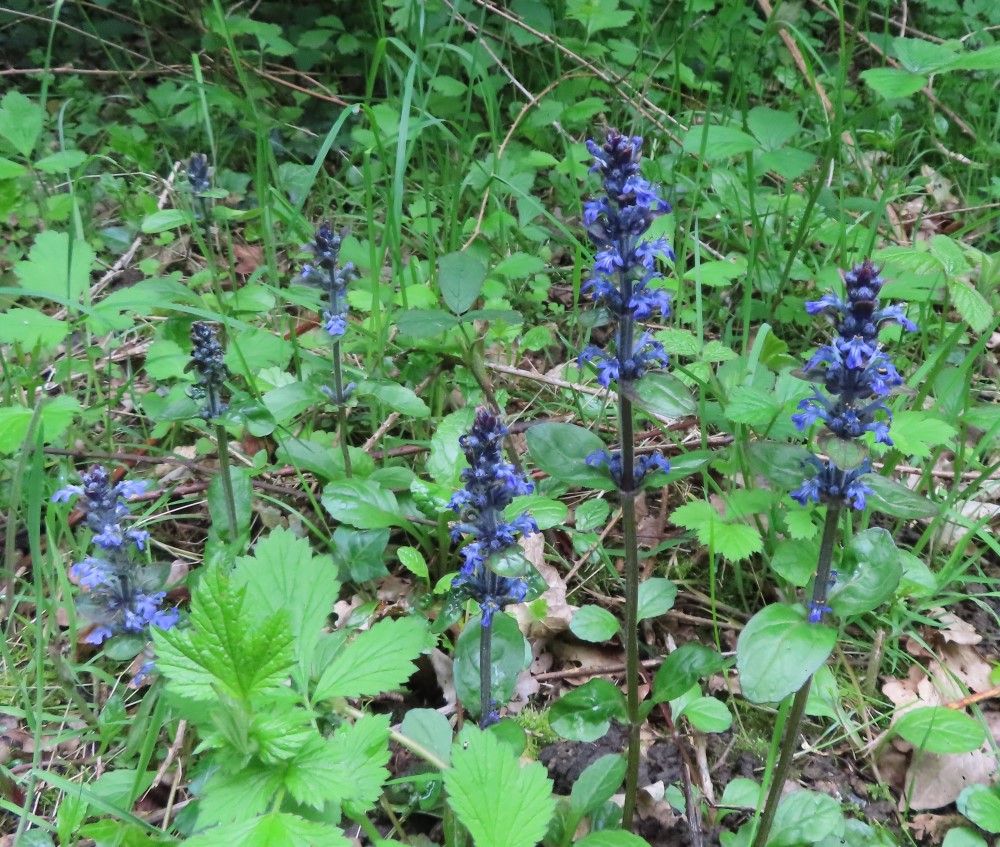
Also showing nicely now is the Bugle, its short upright stems only around six inches high but holding candelabra-style blue flowers. The Ground-ivy, which is closely related and very similar, is also blooming now, but it has round leaves with crinkly edges.
The flowers in Lovelocks Meadow may take a bit longer than usual to get going as we couldn’t cut Lovelocks in the Autumn – the weather turned in September just before it was due, and we then had the wettest October on record – so it was only cut in late March.
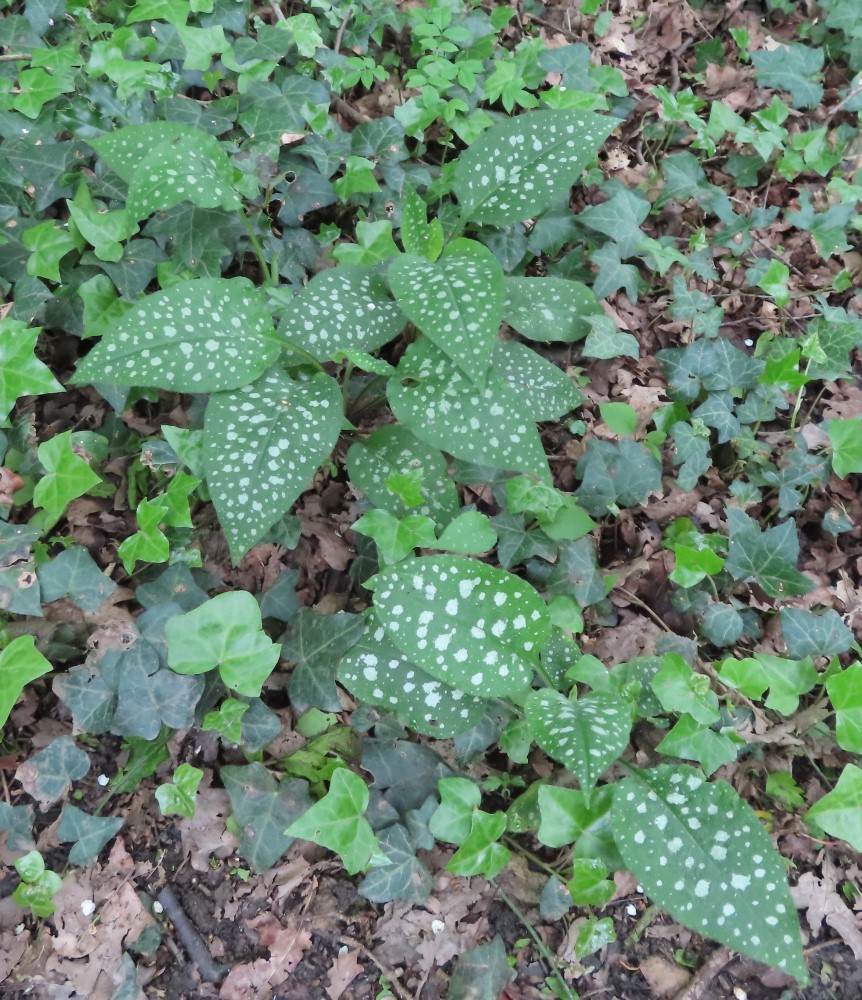
One new record to report: our first Lungworts have been spotted in Forties Field alongside one of the footpaths. Its blotchy leaves reminded the ancients of diseased lungs – ‘wort’ was a word applied in olden days to any plant used in medicine, and there was the mistaken belief that if it looked like the condition, it could treat the condition, hence the name (and indeed the Latin name, Pulmonaria officinalis – those familiar with medical terms will know that ‘pulmonary’ means ‘of the lungs’). It is a native of southern Europe and was probably introduced around 1600, but is now widely found in the wild. Look for pretty little purplish-blue flowers later in the summer.
Unsurprisingly butterflies have not been numerous yet. Many days have been too cool for them to forage. There have been a few Whites, Red Admirals, Peacocks, Orange Tips and Brimstones, but by mid May there should be plenty more. Let’s hope they are just delayed. Most dragonflies hibernate as larvae, a few as eggs; either way the disaster in our pond may have done for them, none have so far been seen this Spring.
On to the birds: the last of the winter thrushes (Redwings and Fieldfares) lingered quite late into March, but since then the summer visitors have barely trickled in. Chiffchaffs are always the first, with one or two birds in March, and then Blackcaps are soon following; but other summer migrants have been slow to arrive. The first Swallow was seen nearby in early April during a light snow flurry – bet it wished it was still in Africa! As at mid May, the local Swifts and House Martins have only just arrived, and the first Whitethroat and Lesser Whitethroat have been singing nearby.
At least the finches seem to be going well: there are several pairs of Linnets in the hedgerows of Lovelock’s Meadow and up the hill nearby on Bolt Cellar Lane, a pair of Yellowhammers seems to be established just off site along the stream side, and there are singing Greenfinches and Chaffinches. Sadly we seem to have lost our resident pair of Bullfinches.
There are plenty of signs the Tits are however not having a good breeding season. They only get one shot at it, unlike Robins or Blackbirds which can have two or three broods a year, because they are synchronised to breed when the tree caterpillar harvest is at its peak. Their main prey comprises the caterpillars of two moths: the Winter Moth and the Green Tortrix. It seems that the poor weather and late leafbreak this year has impacted the moths and the Tits are therefore struggling. A single Blue Tit chick needs about 100 caterpillars a day to grow! Those nestboxes checked so far at Swaines Green have smaller broods than usual, and some garden tits have been seen feeding their young on bird seed and peanuts, a sure sign they can’t find enough caterpillars.